
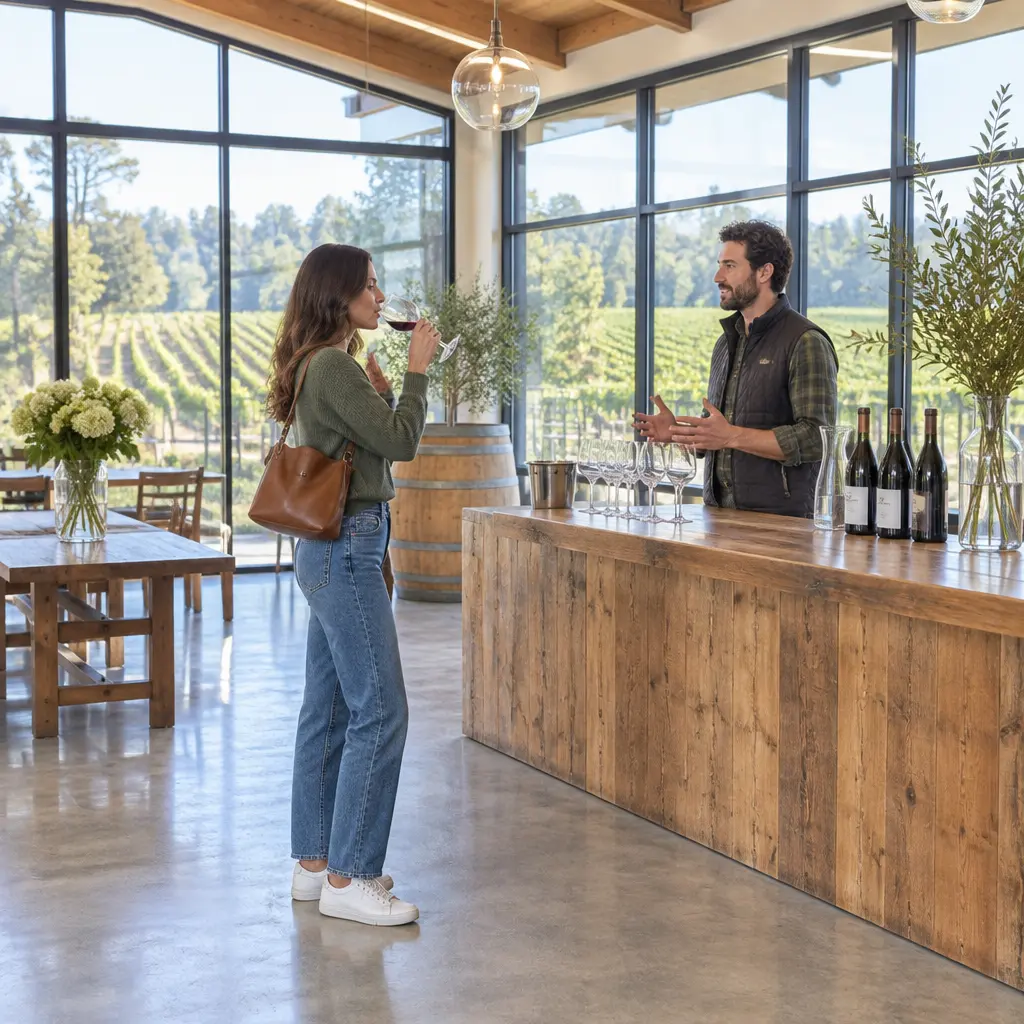
A winery tasting is a guided opportunity to sample wine, learn how it is made, and decide what you enjoy—not a test of expertise. Good etiquette is simply considerate behavior: arrive prepared, listen to your host, taste at your own pace, and ask questions without worrying about using specialized language. These norms matter as wine tourism grows: the Wine Institute reports that California wineries welcomed 24.9 million winery visits in 2022, illustrating how many visitors with different levels of experience share tasting rooms. Knowing what to expect can make the visit more comfortable for first-timers and more enjoyable for everyone.
Winery tasting etiquette: the basic social norms
Winery tasting etiquette means the practical courtesies that help guests and staff share a tasting experience smoothly. It is not a single formal code, and customs vary by winery, region, tasting format, and occasion. The Wine & Spirit Education Trust (WSET), a wine-education organization, teaches structured ways to observe, smell, and taste wine; those techniques can help visitors describe what they notice, but they are not a requirement for being welcome in a tasting room.
The most useful distinctions are between reservation etiquette and walk-in etiquette, guided tastings and self-paced tastings, and tasting-room behavior and vineyard-tour behavior. Across those formats, the shared principles are punctuality, respectful conversation, responsible alcohol consumption, and consideration for staff and other guests. A tasting can be as simple as asking what a wine tastes like or saying, “I like this one.”
Reservations, arrival, and group size
Reservation etiquette means following the winery’s booking instructions and communicating changes promptly. Check the winery’s website or confirmation for its opening hours, tasting fee, duration, group-size limit, age policy, food rules, and accessibility details. If you are running late or need to cancel, contact the winery; a tasting room may have limited seating and scheduled staff time.
Arrive on time, or a few minutes early if the booking requires check-in. If you are visiting without a reservation, ask politely whether the winery can accommodate you rather than assuming a tasting is available. For groups, confirm the number of guests in advance and keep conversation at a level that lets neighboring visitors hear their hosts. These small courtesies are especially helpful at busy wineries, where tastings may run on timed slots.
Tasting-room manners and questions
Tasting-room etiquette is the practice of sharing attention and space with the host and other guests. Listen during introductions, avoid interrupting, and ask questions when there is a natural pause. Useful questions include what grapes are in the wine, how long it was aged, what food might pair well with it, or whether the winery offers a smaller pour.
You do not need to pretend to detect aromas or flavors you cannot identify. Wine vocabulary is descriptive, not a pass-or-fail test: “fruity,” “tart,” “smooth,” and “not for me” are all valid reactions. WSET’s structured tasting approach—looking at appearance, smelling, and tasting—offers one way to organize observations, but personal preference is the point of a casual visit. If you dislike a wine, express that politely rather than disparaging the producer or another guest’s choice.
Pace, pours, and responsible drinking
Responsible tasting means managing alcohol intake and making safe plans before drinking. A tasting pour is often smaller than a restaurant glass, but pour sizes and tasting lineups vary. Sip slowly, use the provided water, and take breaks. If a winery offers a spittoon, it is acceptable to use it; spitting is a standard tasting practice, not an insult to the wine.
The U.S. Centers for Disease Control and Prevention advises that people who choose to drink should do so in moderation, while noting that some people should not drink at all. Do not drive after drinking; arrange a designated driver, transportation service, or another safe way back before the visit. If you are pregnant, taking medication, under the legal drinking age, or avoiding alcohol for health or personal reasons, ask about nonalcoholic options or enjoy the visit without tasting.
Winery tasting etiquette adapts to the tasting format
The basic etiquette stays consistent, but the right approach changes with the format. A seated, host-led flight calls for attention to the presentation; a casual tasting bar may allow more flexibility; and a vineyard tour adds outdoor safety and group-navigation considerations. Checking the format in advance helps first-time visitors feel prepared without making the experience feel formal.
Guided flights and seated tastings
A guided flight is a set of wines presented in sequence, often with explanations about grape varieties, vintage, vineyard, or production. Let the host introduce each wine before moving on, and avoid reaching across the table or pouring for others unless invited. If you need a slower pace, a different glass, or a break, ask the host. There is no need to finish every pour.
For a private or premium tasting, expect the host to devote more time to the group and follow any stated schedule. Questions about price, shipping, or availability are normal. Buying wine is not generally an etiquette requirement; thank the host whether or not you decide to purchase.
Walk-in bars and casual tastings
A walk-in tasting is a less structured visit, usually at a counter or shared table. Wait to be acknowledged, keep belongings from occupying extra seats, and avoid crowding the service area. If the room is busy, be ready to order or choose a flight without holding up the line. Ask staff how many wines are included and whether tasting fees are credited toward a purchase; policies differ by winery.
Vineyard tours, food, and photography
A vineyard tour combines tasting with movement through working agricultural space. Follow the guide, stay on designated paths, and do not touch vines, grapes, machinery, or cellar equipment unless invited. Wear comfortable shoes and check the weather, since outdoor ground can be uneven or muddy.
Food and photography rules are venue-specific. Some wineries allow picnic food, while others prohibit outside food or provide food only with advance booking. Ask before unpacking a meal or bringing pets. Likewise, check before photographing staff, other guests, private areas, or production spaces; be especially mindful during a guided explanation. These questions are ordinary planning, not signs of being difficult.
First-time winery visitors can feel confident without wine expertise
A comfortable first visit depends more on curiosity and courtesy than on technical knowledge. The winery’s host can explain unfamiliar terms, and a visitor can simply describe what they enjoy. The following practical habits make the experience easier while respecting the people who work there.
A simple first-visit checklist
- Check booking requirements, fees, age policies, timing, food rules, and accessibility before leaving.
- Plan transportation that does not rely on driving after drinking.
- Arrive on time and tell the winery if your plans or group size change.
- Ask for explanations in plain language; there is no required wine vocabulary.
- Drink water, pace yourself, and use a spittoon if you prefer.
- Follow the host’s guidance, respect shared space, and ask before taking photos or bringing outside food.
- Thank the staff, whether or not you buy wine.
A realistic example: when a guest dislikes a wine
Imagine a visitor tastes a red wine and finds it too dry. They might say, “This one is more structured than I usually enjoy. Is there something softer or fruitier in the flight?” That response shares a genuine preference, gives the host useful direction, and keeps the conversation respectful. The visitor does not need to finish the pour or apologize for their taste.
The same approach works if a guest does not know a term, needs a nonalcoholic option, or wants to skip a wine. Clear, polite requests help staff tailor the visit and reduce the pressure that can make a tasting room feel intimidating.
Conclusion: etiquette makes winery visits more welcoming
Winery tasting etiquette is a flexible set of courtesies, not a specialist’s rulebook. Make reservations thoughtfully, arrive on time, listen to the host, ask honest questions, taste at a responsible pace, and respect the winery’s policies. Whether the visit is a guided flight, a casual bar tasting, or a vineyard tour, considerate behavior helps staff and guests share the experience comfortably.
For a first visit, check the winery’s current guidance, plan safe transportation, and give yourself permission to enjoy wine in your own words. The best next step is to choose a winery, ask any practical questions before booking, and arrive curious rather than worried about getting etiquette “right.”
Sources: Wine Institute, “California Wine Tourism,” https://wineinstitute.org/our-industry/statistics/california-wine-tourism/; Wine & Spirit Education Trust, “How to Taste Wine,” https://www.wsetglobal.com/knowledge-centre/blog/2020/how-to-taste-wine/; Centers for Disease Control and Prevention, “About Alcohol Use,” https://www.cdc.gov/alcohol/about-alcohol-use/