
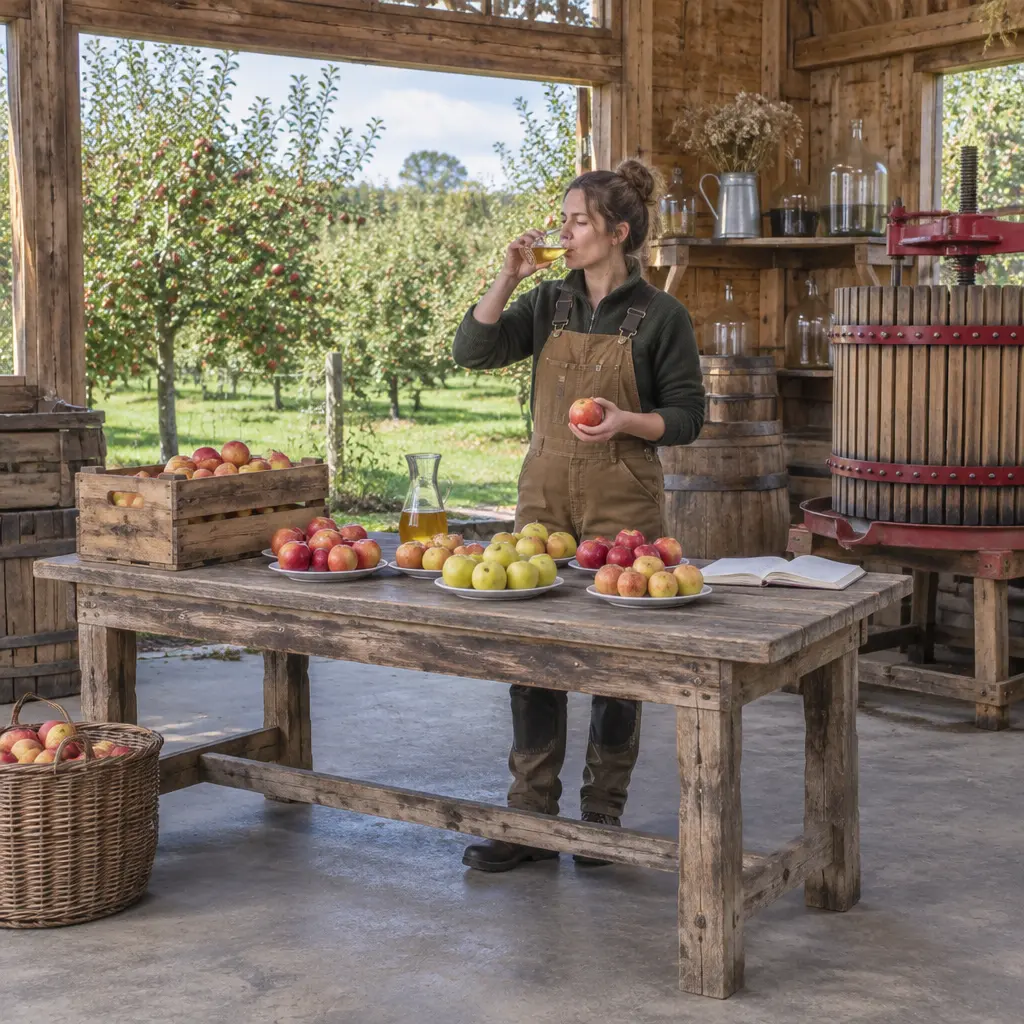
Hard cider spans a broad range of styles, from sweet, fruit-forward commercial products to dry, structured ciders shaped by apple variety, fermentation, and aging. The distinction is not simply “craft” versus “mass-market”: sweetness can occur in either, and scale alone does not determine quality. A more useful comparison examines measurable residual sugar, acidity, tannin, aroma, and production choices. U.S. cider sales and production have changed alongside shifting consumer tastes, while federal labeling rules provide limited clues about sweetness. Understanding those factors helps shoppers identify the cider they want and helps producers communicate flavor without relying on assumptions about size or price.
Cider Flavor Complexity and Sweetness: What the Terms Mean
Hard cider is an alcoholic beverage produced by fermenting apple juice. In the United States, the Alcohol and Tobacco Tax and Trade Bureau (TTB) regulates cider as a wine category for labeling and excise-tax purposes, with applicable definitions depending on alcohol content, ingredients, and production method. “Craft complexity” is not a regulated technical category, nor is “mass-market sweetness.” Here, craft complexity means a layered sensory profile created by interacting fruit, fermentation, acidity, tannin, carbonation, and maturation characteristics. Mass-market sweetness describes a common commercial style that emphasizes a readily recognizable sweet taste; it does not describe every large producer or every product in the category.
The comparison matters because sweetness is only one dimension of flavor. A cider can taste sweet because it contains residual sugar, because its acidity is low, or because fruit aromas suggest sweetness. Conversely, a cider with measurable residual sugar may taste relatively dry if high acidity balances it. The U.S. Alcohol and Tobacco Tax and Trade Bureau’s cider labeling rules use specific standards for defined product categories, but consumers should not treat words such as “craft,” “natural,” or “traditional” as a reliable sweetness scale. Reading the label and tasting for balance provides a better guide.
Fermentation and Apple Character Build Cider Flavor Complexity
Cider’s complexity begins with its raw material and fermentation. Apples contribute fermentable sugars as well as acids, aroma compounds, and—in some varieties—polyphenols that can create bitterness and astringency. Fermentation converts much of the juice’s sugar into alcohol and carbon dioxide while producing flavor compounds. The resulting profile depends on apple selection, yeast, fermentation temperature, oxygen exposure, and decisions made after fermentation, including blending, filtration, carbonation, and sweetening.
Apple varieties and tannin structure
Apple variety is a major source of variation. Cider makers may use culinary or dessert apples, dedicated cider varieties, or blends. Traditional cider apples are often grouped by their relative acidity and tannin content, with bittersweet and bittersharp types contributing more phenolic structure than many eating apples. Tannins can create drying sensations and bitterness, while acidity supplies freshness and can make fruit flavors seem brighter. A blend that balances sweet, sharp, bittersharp, and bittersweet fruit can therefore taste more layered than juice built around a single soft, sweet-tasting apple.
These categories are useful guides rather than guarantees: growing conditions, ripeness, storage, and blending all affect the juice. The United States Association of Cider Makers describes cider as a product whose character reflects both the fruit and the maker’s process. For consumers, terms such as “single variety,” “bittersweet apples,” or named orchard sources can signal choices worth exploring, but they do not independently prove that a cider will be dry or complex.
Yeast, fermentation, and aroma
Yeast selection and fermentation conditions influence whether cider preserves fresh-apple aromas or develops other notes, such as floral, citrus, spice, or lees-derived character. Fermentation can be stopped with sugar remaining, or it can proceed until most fermentable sugar has been consumed. A producer may also ferment dry cider and later add juice or another sweetening ingredient. These distinct routes can yield similar sweetness on the palate but different aromas, texture, and finish.
The American Cider Association’s Certified Cider Professional materials treat cider styles and production as diverse rather than as a single sweetness continuum. That diversity is reflected in real-world offerings: a traditional farmhouse cider may be dry and tannic, while a modern fruit-flavored cider may be sweet and aromatic; either approach can be made by a small or large producer. Production scale alone is therefore an unreliable proxy for fermentation method or sensory quality.
Residual Sugar and Sensory Balance Distinguish Sweetness From Complexity
Residual sugar is the sugar left after fermentation, but perceived sweetness is a sensory judgment shaped by the whole drink. Acidity can counterbalance sugar, tannin can add grip, and carbonation can make a cider feel brisk. Aroma also matters: ripe fruit or vanilla-like notes may suggest sweetness even when a cider is relatively dry. This is why a single number, label adjective, or first sip cannot fully describe a cider’s structure.
Residual sugar and labeling clues
Residual sugar is commonly expressed in grams per liter or grams per serving, but many cider labels do not provide it. TTB rules establish labeling requirements for regulated wine products, including standards for certain designations such as “dry” and “extra dry”; however, a consumer should check the applicable product category and the exact label rather than assume that every informal tasting term has a uniform meaning. “Semi-dry,” “off-dry,” and “medium” may be used as style descriptions, but their interpretation can vary among producers and markets.
A useful practical comparison is to look for a technical sheet or producer description that states residual sugar, acidity, or fermentation details. If that information is unavailable, the ingredient list and serving details can still offer clues, though they cannot establish perceived sweetness by themselves. A cider sweetened with apple juice may have a different flavor profile from one sweetened with a neutral sugar source, even if the final sugar concentration is similar.
Acidity, tannin, and the finish
Acidity and tannin help distinguish a simple sweet impression from a more structured palate. Acidity creates a crisp, mouthwatering sensation; tannin contributes bitterness and a drying finish. When balanced with fruit, these components can make sweetness seem integrated rather than cloying. A cider can also be complex without being aggressively tannic or highly acidic: complexity may come from layered apple aromas, fermentation character, or careful blending.
A simple tasting comparison can make these contrasts clearer. Pour two ciders at similar temperatures, note their aroma before tasting, and then compare initial sweetness, acidity, texture, and aftertaste. A short chart can record each sample on a 1-to-5 scale for sweetness, acidity, tannin, fruit intensity, and finish length. This is a tasting aid, not a laboratory measurement, but it helps separate “sweet” from “one-dimensional” and “dry” from “complex.”
Craft and Mass-Market Cider Are Production Contexts, Not Flavor Guarantees
“Craft” and “mass-market” refer broadly to production scale, positioning, and distribution—not to legally defined flavor classes. The American Cider Association’s industry reporting tracks the U.S. cider category through producer and market data, while the Brewers Association’s craft-beer definition illustrates how trade groups may define craft in another beverage sector. Neither framework makes a product’s sensory quality automatic. Large cider companies can make dry or orchard-focused products, and small makers can produce sweet, approachable ciders.
Why commercial sweetness is common
Sweet, fruit-forward cider can be accessible to drinkers who prefer familiar flavors, and it can support consistent products across large distribution networks. Flavoring, blending, filtration, and controlled sweetening can help a producer deliver a repeatable taste. These are production choices, not evidence of poor quality. The trade-off is that a highly standardized profile may foreground sweetness and fruit flavor while making orchard variation, tannin, or fermentation character less prominent.
Market data should be interpreted carefully. The U.S. Alcohol and Tobacco Tax and Trade Bureau publishes alcohol-production and tax information, while industry organizations publish cider market estimates; these sources use different measures and time periods. The Brewers Association’s 2023 industry report, for example, reported that U.S. craft beer volume fell 1% in 2023, but that is beer data—not a statistic about cider. Avoiding category mix-ups is essential when describing cider trends. For current cider-specific figures, consult the American Cider Association’s latest market report and check whether its figures describe volume, retail value, producer count, or another measure.
Small-producer methods and regional expression
Smaller cideries may have greater flexibility to work with local or less-common apple varieties, make limited blends, or release bottles from individual orchards and vintages. Those practices can make regional differences more visible, though they do not guarantee complexity. Weather, harvest timing, fruit condition, equipment, and fermentation management still shape the result. A small-batch label is best treated as context; the cider’s ingredient, process, and sensory details remain more informative.
A useful case study is the contrast between a broad-distribution fruit-flavored cider and an orchard-focused bottle from a regional maker. The first may emphasize stable sweetness and familiar fruit aroma; the second may emphasize a particular apple blend, dry fermentation, or bottle conditioning. Neither category is inherently superior. Comparing their stated ingredients and tasting notes demonstrates how the same beverage category can serve different preferences and occasions.
How to Choose Cider by Flavor Rather Than Marketing
Consumers can make a more reliable choice by translating broad style claims into specific questions. Is the cider dry, off-dry, or sweet? Does the producer disclose residual sugar? Which apples or other fruits are used? Is it still, sparkling, or bottle-conditioned? Does the description mention acidity, tannin, fermentation, or aging? These details help distinguish a sweet but balanced cider from one whose sweetness dominates.
- For a crisp profile, look for descriptions such as dry, tart, or high-acid, and check whether the producer provides sugar information.
- For more structure, seek references to bittersweet apples, tannin, orchard blends, fermentation character, or bottle conditioning.
- For an easygoing fruit-forward option, choose a cider whose sweetness and fruit flavor are clearly described rather than assuming that “craft” means dry.
- When comparing products, note alcohol by volume and serving size as well as sweetness; these affect how a cider fits an occasion but do not measure complexity.
A tasting flight is especially useful because sweetness is easier to judge comparatively. Try a dry cider, a balanced off-dry cider, and a sweet fruit-forward cider side by side. Record aroma, perceived sweetness, acidity, tannin, carbonation, and finish. This small exercise makes consumer preferences more precise and gives producers clearer language for describing their products.
Conclusion: Evaluate Cider Complexity Beyond Sweetness
Cider flavor complexity comes from the interaction of apples, fermentation, residual sugar, acidity, tannin, aroma, and finishing choices. Sweetness is a legitimate style preference, not a dependable marker of mass production or low quality; “craft” is likewise not a guarantee of dryness or depth. Labels and producer technical information can help, but tasting remains the most direct way to assess balance and finish. For further exploration, compare ciders made from different apple varieties, consult the American Cider Association’s current industry and education resources, and look for producers that disclose fermentation and sugar details.
Sources: Alcohol and Tobacco Tax and Trade Bureau, Cider and Perry, https://www.ttb.gov/wine/cider-and-perry; Alcohol and Tobacco Tax and Trade Bureau, Wine Labeling: Sulfite Declaration and Standards of Fill and Other Labeling Requirements, https://www.ttb.gov/wine/labeling; American Cider Association, Cider Industry and Market Resources, https://ciderassociation.org/; American Cider Association, Certified Cider Professional Program, https://ciderassociation.org/certified-cider-professional/; Brewers Association, 2023 Craft Brewing Industry Statistics, https://www.brewersassociation.org/statistics-and-data/national-beer-stats/